



A Collector's Villa, Not Just a Picture Gallery
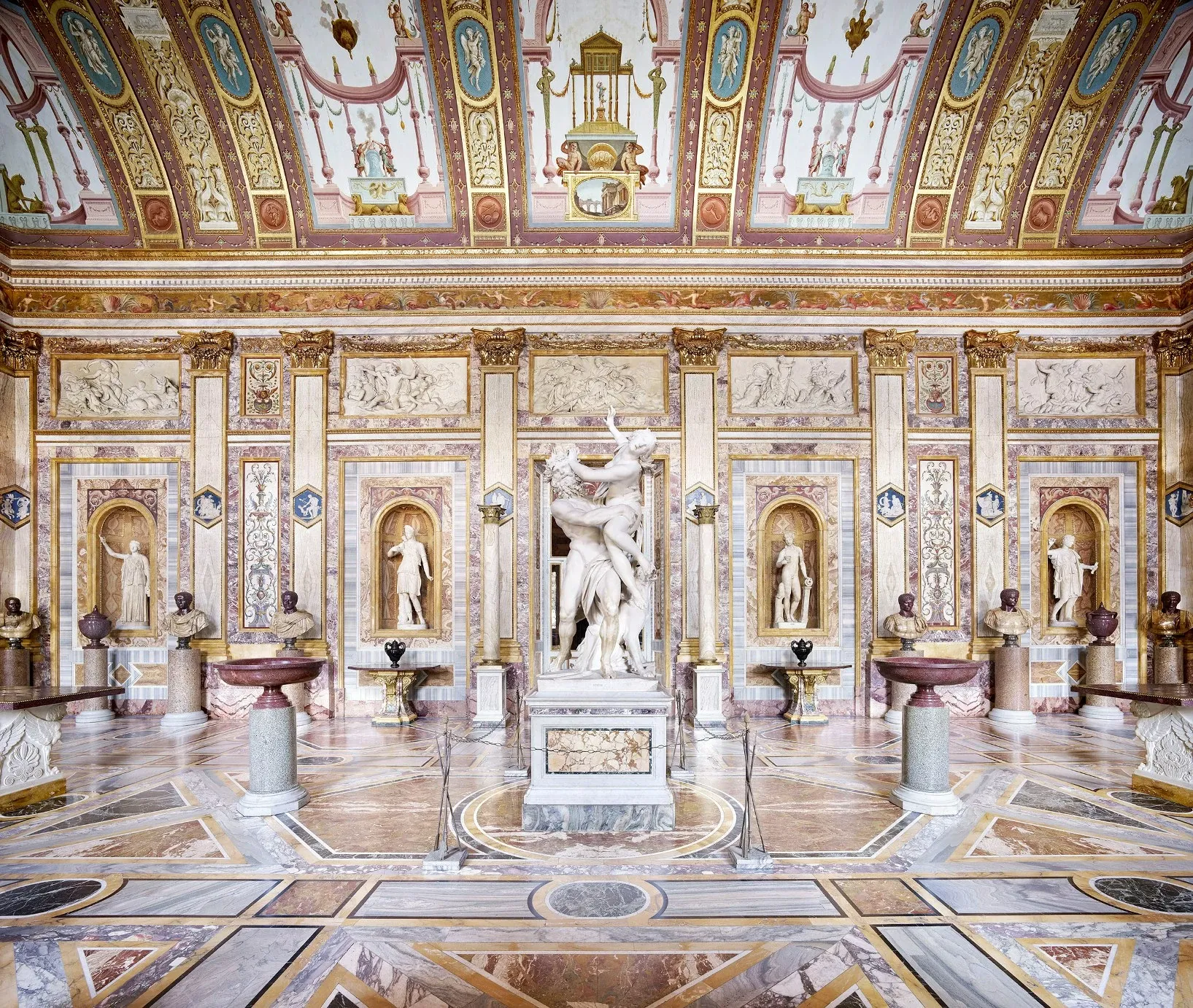
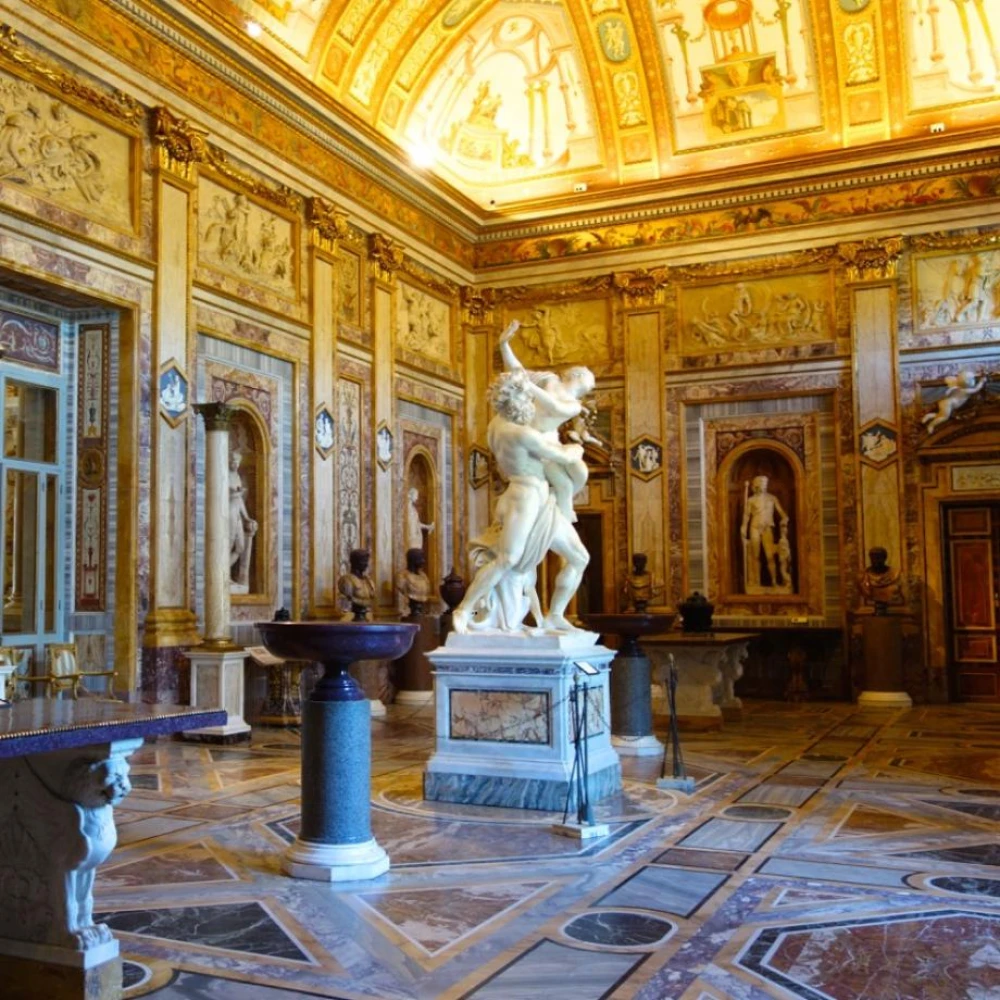
Inside Villa Borghese park, Galleria Borghese brings together ancient sculpture, Renaissance painting and some of the defining works of the Italian Baroque.
Cardinal Scipione Borghese assembled the collection's founding core in early seventeenth-century Rome, commissioning Bernini and acquiring paintings by Caravaggio and Raphael.
Later generations reshaped the interiors and added works such as Canova's portrait of Pauline Bonaparte.
Look closely at the leaves emerging from Daphne's fingers, the still-life detail in Caravaggio's fruit, and the painted ceilings above the sculptures: the setting is part of the collection.
The principal displays occupy two floors, with Bernini and Caravaggio on the ground floor and much of the painting collection upstairs.
Reserve a named, timed ticket before travelling; most visits allow up to two hours, while the final slots are shorter.
The surrounding public park is separate and free to enter..
Galleria Borghese Visiting timetable
Tuesday to Sunday, 9:00 am-7:00 pm; last admission 5:45 pm. Visitors begin leaving at 6:50 pm.
Galleria Borghese Closing Days
Normally closed on Mondays, 25 December and 1 January; check official notices for exceptional openings or closures.
Where is Located
Piazzale Scipione Borghese 5, 00197 Rome, Italy
How to Get to Galleria Borghese
The gallery stands inside Villa Borghese park, near Via Pinciana. Navigate to the museum itself rather than to a generic park entrance.
By Train
There is no railway or metro station at the gallery. From Roma Termini, continue by bus to Pinciana/Museo Borghese. Metro line A stations such as Barberini or Flaminio offer onward bus connections or a walk through the surrounding streets and park.
By Car
Paid street parking is available on Via Pinciana and nearby streets, but spaces are not guaranteed. Only authorised vehicles may enter and park inside Villa Borghese. Check Rome's traffic restrictions before driving.
By Bus
The museum lists buses 910 and 92 from Termini to Pinciana/Museo Borghese. From Barberini, listed options include 52, 53, 63 and 83. Confirm the stop, direction and any diversions with Rome's transport operator before departure.
On Foot
From the Spanish Steps, walk towards Villa Borghese and follow a mapped route to Piazzale Scipione Borghese. From Piazza del Popolo, the route via the Pincio continues through the park. Allow for slopes and the distance between park entrances and the gallery.
Three Reasons to Visit Galleria Borghese
See Bernini turn marble into movement, compare Caravaggio's early and mature paintings, and discover Canova's portrait of Pauline Bonaparte.
Galleria Borghese
Bernini's Apollo and Daphne
Carved in 1622-1625, this sculpture captures Daphne's transformation into a laurel tree. Look at the transition from skin to bark and from fingers to leaves, then consider how the figures' movement changes with your viewpoint.
Caravaggio's Paintings
The collection holds six paintings by Caravaggio, normally displayed in Room 8. Compare the observed fruit and youthful figures of his early work with the concentrated light and quieter intensity of Saint Jerome.
Canova's Pauline Bonaparte
Commissioned by Camillo Borghese in 1804, Canova's portrait presents Pauline Bonaparte as Venus Victrix. The apple identifies the goddess; the carefully carved cushion and mattress demonstrate how marble can suggest softness and weight.
Galleria Borghese: The Essentials
Start with the difference between the park and the museum, the collection's highlights, and how timed admission works.
Compare Galleria Borghese Tickets
Choose between an independent visit and guided interpretation of the collection.
Check the selected date, admission time, total price and meeting instructions. A reservation does not bypass museum checks.